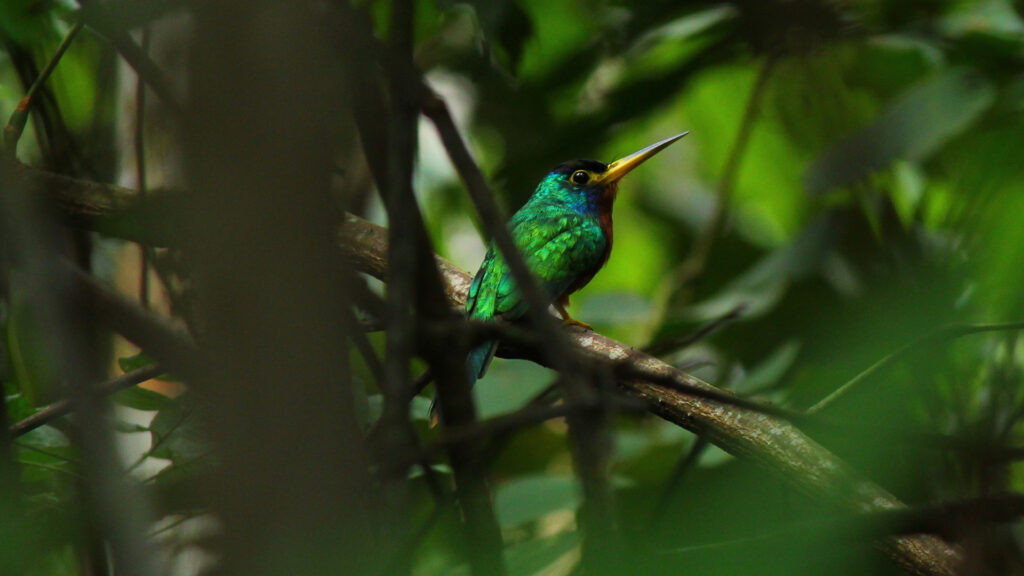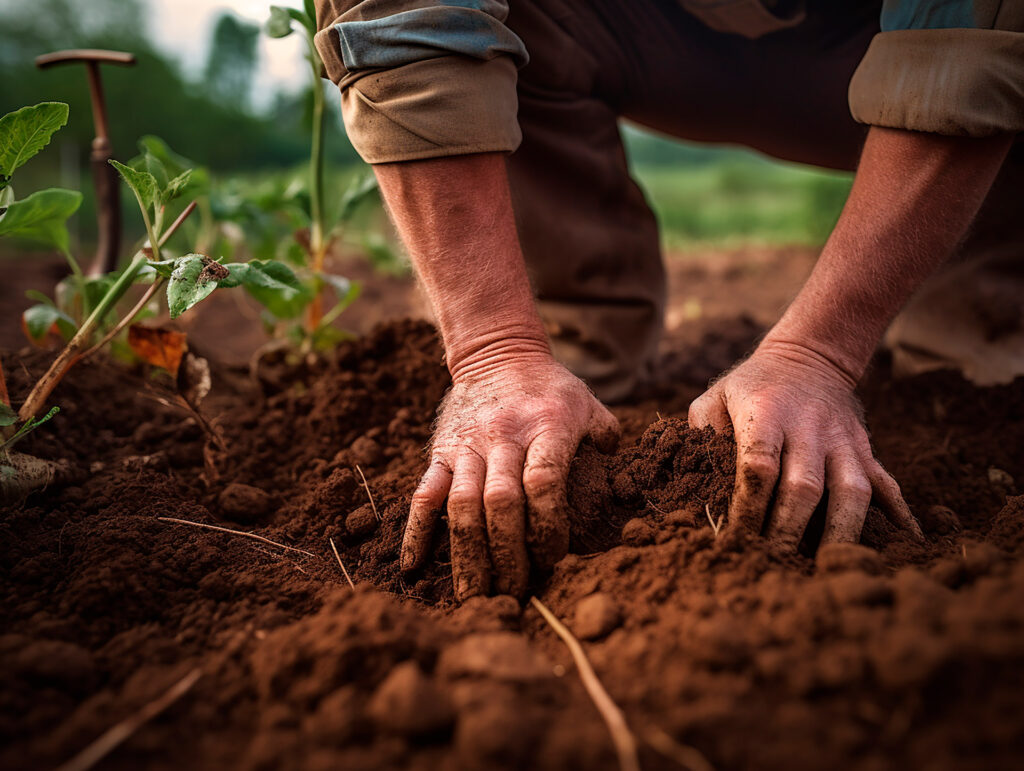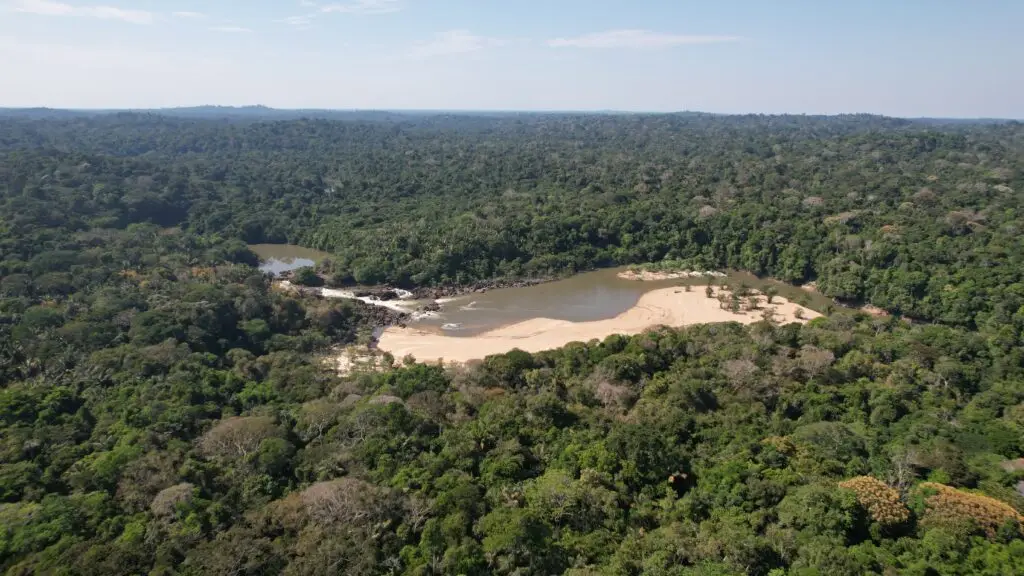



The Rio Preto Jacundá Extractive Reserve, located northeast of the state of Rondônia, is home to 130 traditional residents whose livelihoods are based on extractive activities and small-scale agriculture. Despite the natural wealth present in the forest, many community members live below the poverty line, depending on government assistance programs and facing challenges related to territorial security and sustainable development.
The REDD+ Jacundá Project is a collective initiative developed by the Association of Residents of the Reserve, the NGO Rioterra, the Secretariat of Environmental Development (SEDAM) of Rondônia, and Biofílica. The project aims to strengthen community autonomy in the management and economic development of the Reserve, enabling residents to become protagonists in decision-making processes and contribute directly to biodiversity conservation.
To achieve this goal, several workshops have been conducted through a long-term and cyclical process involving diagnosis, training, awareness raising, collective planning, and, in the current phase, implementation of the activities defined by the community.
Two important workshops were essential for reaching this stage: the definition of the community’s Life Plan and the construction of the Benefit Sharing and Conflict Resolution Mechanism of the REDD+ Project.
A Life Plan built by the community
The community’s Life Plan was developed based on an analysis of the local reality and the collective definition of beliefs, values, and principles. The initiative aims to guide the creation of a Work Plan aligned with the needs, priorities, and aspirations of the Reserve’s residents.
During the workshops, community members were encouraged to discuss and reflect on local socio-environmental, cultural, political, and economic challenges. This participatory process resulted in an Action Plan that represents the community’s main aspirations and priorities.
Among the key themes identified by residents are:
- Recovery of traditional medicine practices and promotion of preventive healthcare;
- Expansion of income generation opportunities;
- Investments in education and technical training;
- Improvement of housing conditions;
- Greater inclusion and participation of young people;
- Strengthening women’s participation;
- Forest conservation and sustainable use of natural resources.
Participatory construction of the Benefit Sharing Mechanism
Another important milestone was the collective construction of the Benefit Sharing and Conflict Resolution Mechanism, designed to establish the foundation for a transparent and participatory process aligned with the community’s aspirations.
The mechanism seeks to ensure that the benefits generated by the project contribute effectively to strengthening the traditional extractive way of life while promoting social, environmental, cultural, and economic development within the Reserve.
The main pillars defined by the community for the creation of the Benefit Sharing Mechanism include:
- Alignment with the demands and priorities of the Reserve;
- Guarantee of social, ecological, cultural, and economic viability of the extractive way of life;
- Promotion of gender empowerment and cultural strengthening;
- Investments in infrastructure, communication, education, and income generation;
- Collaborative management committed to community aspirations.
In addition, it was established that project governance will be strengthened through the experience and participation of partner institutions — Asmorex, Biofílica, CES Rioterra, SEDAM, and UNIR — through a Management Council that will meet periodically to guide and monitor project activities.
Social empowerment and forest conservation
These workshops were fundamental for the structuring of the REDD+ Jacundá Project and represent an example of how project management will be conducted in the coming years: through community participation, social empowerment, and collective decision-making.
By strengthening local governance and supporting sustainable development initiatives, the project seeks to improve the quality of life of traditional residents while reconciling socioeconomic development with forest conservation and biodiversity protection.